
The Donor Sitting Across From You Has Changed. Your Engagement Strategy Should, Too.
What Women’s Giving Trends Reveal About the Future of Fundraising in Australian Schools and Universities
Australian philanthropy is continuing to evolve, creating new opportunities for advancement teams to deepen engagement and strengthen relationships. The number of people giving to charitable causes continues to decline, even as overall giving totals remain strong. Fewer donors are giving more, which means every relationship matters more than ever. As donor communities evolve, institutions have an opportunity to revisit long-standing assumptions about how people give, why they give, and how they want to engage.
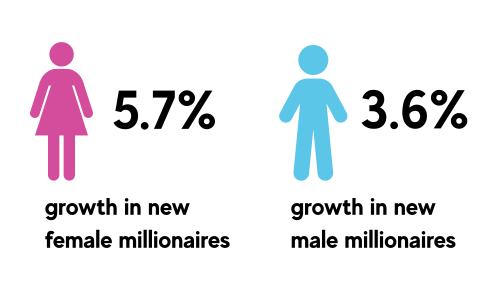
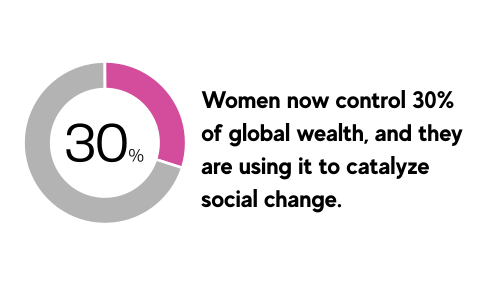
At the same time, Australian communities continue to become more diverse—culturally, economically, professionally, and generationally. More women are leading companies, controlling wealth, influencing household financial decisions, and shaping philanthropic priorities. Over the next two decades, women are expected to inherit a significant portion of the estimated $5.4 trillion wealth transfer taking place across Australia.
Growth of Women & Wealth
Shift in Control of Wealth
Source: ATO / ABS / CoreData 80% Confidence
Source: Women’s Philanthropy Institute, Lilly Family School of Philanthropy
Many advancement programs were built around relationship models that reflected an earlier generation of philanthropy. Today’s donor communities are broader, more diverse, and increasingly collaborative in how they engage and make decisions. This is not about women versus men. It is about recognising that effective fundraising increasingly depends on understanding different motivations, decision-making styles, and relationships with institutions.
A strategic review may also be valuable — one that ensures your approach is oriented toward inclusive growth rather than anchored in the practices of the past. In our experience working with schools and universities across Australia and the Asia Pacific region, some of the greatest opportunities for engagement emerge when institutions broaden how they think about donor relationships and decision making.
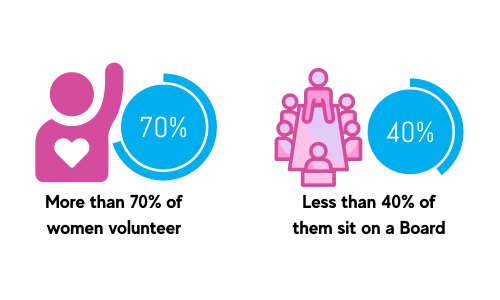
Volunteering & Board Service
While women volunteer more often than men, a large portion of them do not sit on nonprofit boards. According to Australian Government Gender Workplace Statistics, 30.2% of boards and governing bodies have no female directors. By contrast, only 0.4% had no male directors.
Recognising the Many Voices Behind Philanthropic Decisions
One of the most important shifts in fundraising today is recognising that philanthropic decisions are often shaped by multiple voices and influences.
For example, a university hosted an event attended by a high-net-worth couple. The woman was the alumna. Before the evening began, her husband quietly said: “Make sure you ask Penny.” However, at the event much of the conversation was directed toward him instead. It reflected longstanding patterns that many institutions are now thoughtfully re-examining.
These dynamics can also appear in smaller ways:
- correspondence addressed to one partner when decisions are shared
- cultivation events designed around traditional networking models
- governance meetings scheduled around one type of household structure
- engagement strategies that naturally resonate more strongly with some communities than others
Like many long-standing practices, engagement strategies often reflect traditions that are now evolving alongside changing communities and family dynamics.
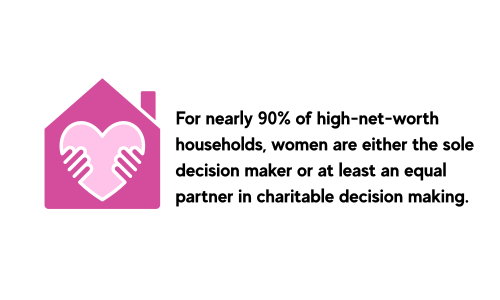
Women have long played influential roles in school and university communities, often through years of volunteering, governance involvement, community-building, and informal leadership. In many cases, they know the institution more deeply than almost anyone else. They may not always be the person signing the cheque, but they are often deeply involved in deciding where philanthropic support goes and why.
Decision-Making in High-Net-Worth Households
Women’s Influence in Australian Philanthropy
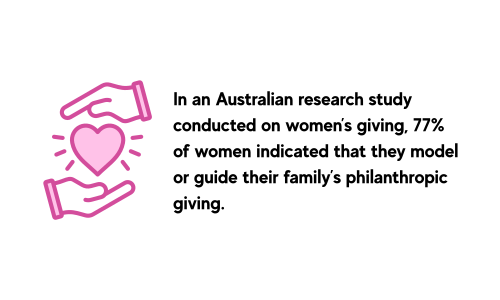
Source: Bank of America Merrill Lynch
Source: Influence of Women in Australian Philanthropy, Kimberly Downes
Some of the strongest fundraising relationships develop when institutions engage not only visible donors, but also the broader network of people influencing philanthropic decisions.
What Women’s Giving Trends Tell Us
Conversations about gender and philanthropy can sometimes drift into stereotypes: women are described as emotional givers, while men are framed as analytical or financially driven. In practice, the reality is far more nuanced.
In feasibility studies and donor conversations, we often see women asking highly detailed questions about outcomes, sustainability, and measurable impact. What will actually change? Who benefits? How will success be evaluated? What is the long-term plan? That is not emotional philanthropy. It is thoughtful philanthropy.
At the same time, many male donors are strongly motivated by loyalty, institutional pride, peer relationships, and a sense of connection to organisations that helped shape their lives. Those motivations are equally personal and values-driven.
Motivations for Giving
Women and men engage in philanthropy differently and have different motivations. Women also like to collaborate, network, and make decisions democratically—which is why we’re seeing an increase in women’s philanthropic networks and giving circles.
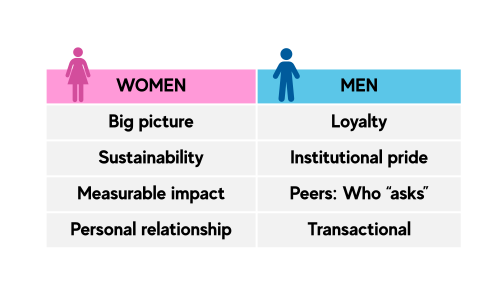
The broader lesson is not that men and women give in different ways. It is that donors bring different experiences, priorities, and expectations to philanthropic conversations. Advancement teams benefit from approaching donor relationships with nuance and curiosity rather than assumptions.
What does consistently stand out, however, is the depth of institutional connection many women develop over time. Particularly in schools, women have often spent years — sometimes decades — volunteering, participating in parent organisations, supporting events, mentoring students, or serving in governance roles. That sustained engagement frequently creates a sophisticated understanding of institutional needs and priorities. As a result, many women want a highly compelling case for impact. They want to understand what their support will make possible and why it matters now.
For advancement professionals, that creates an opportunity for a more thoughtful cultivation process — one grounded in listening, dialogue, and genuine understanding.
Designing Engagement for Today’s Donor Communities
One of the ongoing opportunities in fundraising is creating engagement experiences that reflect the realities of modern donor communities.
A school might organise a breakfast event for lower-primary families, for example, and discover that early mornings are difficult for parents managing school preparation and logistics. Foundation meetings scheduled at 7:00 am may work well for some professionals, while evening events may better suit others.
Traditional cultivation formats — golf days, formal dinners, or legacy-focused recognition events — may resonate strongly with some donors while other forms of engagement feel more meaningful to others.
These decisions often reflect longstanding engagement patterns that may not align as naturally with today’s diverse family structures, professional schedules, and community dynamics.
The same principle applies to donor conversations themselves. Increasingly, philanthropic decisions are collaborative: couples make decisions together, blended families shape priorities collectively, and major gifts often involve multiple voices and influences. Advancement teams that intentionally create space for all voices involved in philanthropic decision-making tend to build stronger and more enduring relationships.
Technology has also helped accelerate this shift. Virtual meetings and hybrid engagement models now make it easier to include partners, family members, and internationally based stakeholders in meaningful ways. Organisations that embrace that flexibility are often creating richer and more representative conversations as a result.
The Bigger Lesson: Fundraising Requires Cultural Fluency
Gender is only one part of a much larger shift taking place across Australian philanthropy.
School and university communities today include families from a wide range of cultural, religious, and socioeconomic backgrounds. Each brings different perspectives on generosity, community responsibility, education, and giving.
In some communities, philanthropy is highly public and institution-focused. In others, generosity may be deeply private, family-directed, or expressed primarily through time and mutual support rather than formal charitable structures. As donor communities become more diverse, organisations have an opportunity to develop more culturally responsive and relationship-centered approaches to engagement.
Some schools across Australia now have significant international parent populations and community groups that benefit from different engagement approaches than traditional alumni or parent networks. The most effective institutions are not translating existing strategies, they’re taking time to understand how different communities prefer to build relationships, participate, and contribute.
That begins with curiosity.
Ask people how they want to engage. Ask what matters to them. Ask how philanthropy is understood within their community. Ask what kinds of involvement feel meaningful.
The strongest fundraising strategies are built on listening.
A Shift Toward More Authentic Stewardship
Another notable change emerging across philanthropy is how donors think about recognition and long-term relationships.
Increasingly, many donors are placing greater value on authentic relationships and meaningful connection to impact. They want to feel known, respected, consulted, and genuinely connected to the organisations they support. That may mean smaller, more meaningful engagement opportunities rather than large-scale recognition events. It may mean direct interaction with scholarship recipients or deeper conversations with institutional leaders. It may mean stewardship strategies that prioritise long-term trust and connection.
Scholarships are a particularly powerful example. While some donors may not be interested in putting their name on a building, many respond deeply to opportunities that create direct human impact and lasting educational transformation.
In an increasingly competitive philanthropic environment, authentic stewardship is becoming one of the defining characteristics of effective advancement practice.
The Most Important Shift? Listen More.
Effective fundraising today requires more than a polished case for support or a well-run campaign. It requires understanding people — their motivations, experiences, values, relationships, and aspirations.
That means moving beyond ‘templated’ engagement strategies and recognising that different donors will connect with institutions in different ways. It also means recognising that the future of philanthropy will belong to organisations capable of building broader, more inclusive, and more thoughtful relationships across increasingly diverse communities.
The institutions best positioned for the future will be those that listen carefully, engage thoughtfully, and build relationships that reflect the full diversity of their communities.