
Gift Planning in the Age of ‘Free’ Artificial Intelligence
I have been losing sleep lately. Not over a donor or a complicated estate, but over a handful of articles that have left me genuinely unsettled about the future.
In February 2026, Matt Shumer, an AI entrepreneur and startup founder, published an essay called “Something Big Is Happening” and the message was unequivocal: AI is about to upend the labor market at a pace few expect. Viewed more than 80 million times, it clearly struck a nerve. His argument: AI has crossed a threshold that most professionals aren’t taking seriously, and the disruption to white-collar careers will be as sudden as early COVID—but permanent. The Atlantic’s “America Isn’t Ready for What AI Will Do to Jobs,” and the financial research firm Citrini’s “2028 Global Intelligence Crisis” scenario project a future in which AI renders entire categories of knowledge work obsolete.
These are not fringe voices. They prompted to me reflect deeply about my own future in philanthropy—gift planning to be precise: What happens to our profession when intelligence becomes abundant and cheap?
My answer, perhaps surprisingly, is that Gift Planning may be one of the most resilient career paths in the white-collar world. Here’s why.
Gift Planning Is a High-Trust Life Event, Not a Transaction
While AI will likely take over the math of estate planning, the actual day-to-day work of Gift Planning experts is fundamentally about mortality, legacy, and family dynamics—territory where humans remain stubbornly resistant to machine interference.
Analysts predict that AI will eliminate the need for habitual middlemen (like travel agents or mortgage brokers) because they only solve tedious problems. Yes, AI will eventually outperform any human at modeling and explaining the tax advantages of Charitable Lead Trusts and Donor Advised Funds, and generating sample bequest language tailored to the charity’s mission with perfect precision. But Gift Planning is not a tedious transaction. Donors aren’t just looking for the best tax outcome. They are wrestling with the emotional weight of their own death and their family’s inheritance. AI can calculate the $20,000 tax break that a donor and their family might receive, but it cannot hold space for a donor’s grief or their desire to be remembered.
The Trusted Advocate at the Most Critical Moments
Gift Planning involves complex legal vehicles (IRAs, Trusts, Wills) that intersect with a charity’s specific mission. When a multimillion-dollar estate is on the line, the charity and the donor’s family want a human professional who is ethically accountable for honoring both the spirit and trajectory of the gift. It is the gift planner—not an algorithm—who sits at the table when a donor’s wishes are disputed, ensures that the charity upholds its obligations, and advocates for the donor’s true intent when it matters most.
The Relationship Is the Gift
This type of accountability is only part of the story. The most effective gift planners and major gift officers build relationships with donors that may span decades—attending their milestone celebrations, meeting their families, listening to their stories, understanding their values, and earning the kind of trust that is only possible between two human beings who have walked through life together. It is the depth of the relationship, not a tax model or a drafted document, that ultimately moves a donor to make a transformational gift. A skilled and experienced gift planner brings curiosity, emotional intelligence, patience, and genuine care to every conversation. They remember the donor’s late spouse, the scholarship that changed their life, and the cause that keeps them up at night. In the end, a gift planner’s greatest asset is not their knowledge of tax law or estate vehicles. It is that combination of legal accountability, emotional intelligence, and genuine human connection that is something no machine can replicate.
From Technical Expert to Philanthropic Counselor
If these predictions come true, there will be a shift for top-tier donors. They may increasingly bring novel assets to the table, requiring fundraisers to use AI as a thinking partner to model how new assets can fund a CRUT or CGA. The Gift Planner’s role shifts from technical expert to philanthropic counselor.
| Task | AI’s Role | Gift Planner’s Human Role |
| Technical Drafting | Generates sample trust language and tax models. | Verifies that the AI-generated draft aligns with the donor’s specific legacy goals. |
| Prospecting | Analyzes DAF patterns to find ready donors. | Uses those insights to initiate a sensitive, human conversation. |
| The “Ask” | Can’t do it. Machines don’t have skin in the game. | Navigates the delicate social/emotional aspects of fundraising and secures the actual commitment. |
| Estate Friction | Simplifies the paperwork of an IRA transfer. | Manages the human friction between heirs, lawyers, and the Charity. |
In a world where intelligence is abundant and cheap thanks to advanced AI, human empathy and moral authority will become the new scarcity. Gift Planning experts aren’t just moving money, they are carefully stewarding a human being’s final statement to the world. That is one of the most AI-proof jobs in existence.
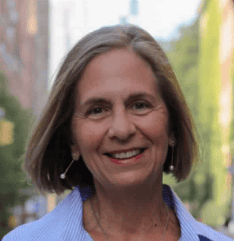
Meryl Cosentino is a Marts&Lundy consulting partner and the Assistant Vice President of Gift Planning, Trusts & Estates at a renowned New York City-based institution of higher education. Learn more about Meryl.